How to Take Care of Your Padel Racket (and Make It Last)
A practical guide to padel racket care: how to clean it, where to store it, how to protect the frame, when to change the overgrip, and when the racket is done.
Quick Answer
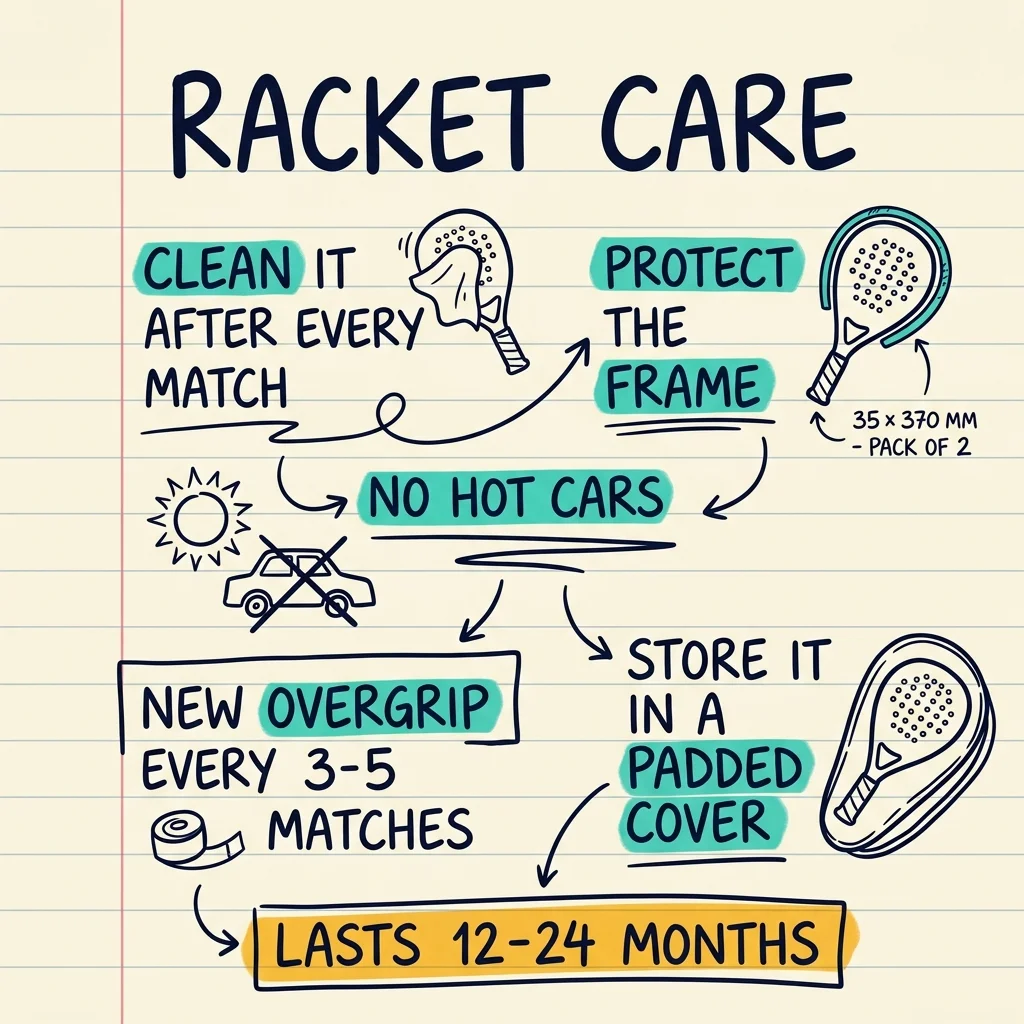
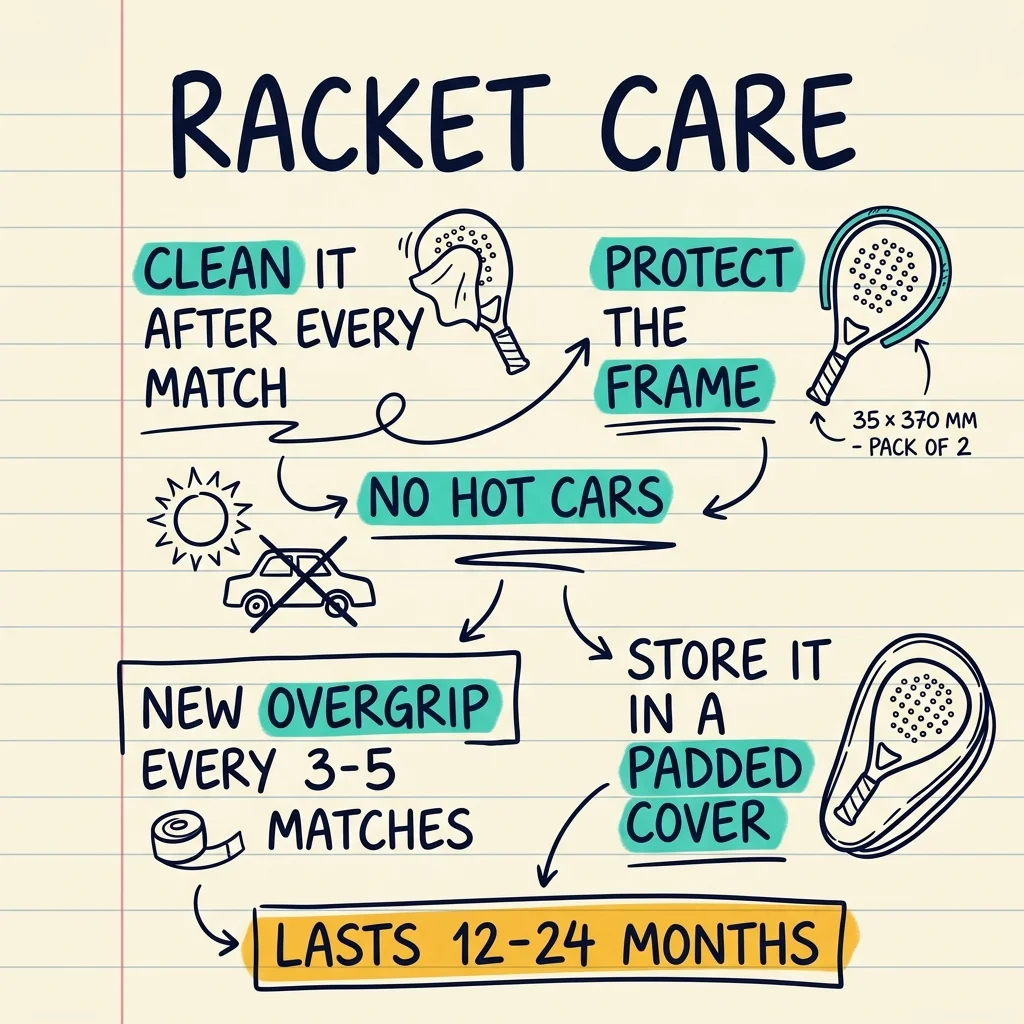
Taking care of a padel racket comes down to six habits: clean it with a dry cloth after every match, fit a frame protector, keep it out of extreme heat and cold, change the overgrip regularly, store it in a padded cover, and check it for wear. A racket treated this way keeps its performance for 12 to 24 months.
Last updated: September 2026 · Product details and prices verified at time of writing.
Why Racket Care Matters
A padel racket is not a tennis racket. It's built from carbon faces around a foam core, and it plays inside a cage of glass and steel. Every low volley, every chiquita near the back wall, every scramble for a ball off the side glass is a chance for the frame to meet a hard surface.
Those impacts add up. A racket that never gets cleaned loses its surface grip. A racket left in a hot car loses the bounce in its core. And a racket without a protector chips away at the frame until a crack ends its life years early.
The fix isn't complicated, and it costs almost nothing. Here's the routine.
1. Clean It After Every Match
Dust, sand and sweat build up on the faces and the frame, and they quietly damage the surface. The routine takes a minute.
- Wipe the faces and the frame with a dry microfiber cloth.
- For stubborn marks, dampen the cloth slightly with water and a little neutral soap.
- Dry the racket immediately afterwards.
What you should never do is soak it. Water reaches the EVA core and the frame adhesives, and the racket starts feeling dull — less response, less power. Never submerge a padel racket in water, and skip aggressive chemical cleaners altogether.
2. Protect the Frame
This is the single best investment you can make in your racket's lifespan. A protector is a strip of adhesive tape that runs around the outer edge of the frame, exactly where the racket meets the glass, the fence and the ground. It absorbs the hit so the carbon doesn't have to.
The maths is simple. A protector costs a few euros; a new racket costs anywhere from €100 to €400. Skipping a protector to save a few euros is how a good racket becomes an expensive paperweight.
Look for a protector that fits standard racket frames, adds minimal weight, and doesn't change the balance. In our shop we stock the Palbea Transparent Padel Racket Protector — a rough-finish, transparent strip, 35 × 370 mm per strip, supplied as a pack of two and made in Spain. The transparent design keeps the racket looking stock, and the micro-grid texture cushions impacts without altering how the racket plays.
Apply it properly and it stays put for months. Clean the frame edge first, start at the bottom of the head, peel the backing as you go and press firmly around the curves. If it wrinkles, peel back that section and redo it.
3. Keep It Out of Extreme Temperatures
The core of a padel racket is EVA foam, and foam hates fast temperature changes. Heat softens it, cold hardens it, and both mess with the response you feel on court.
- Never leave the racket in a hot car or in direct sun for long.
- In winter, don't leave it in a cold boot overnight.
- Use a thermal cover or a padded thermal racket bag when you travel.
If your racket lives in the trunk between matches, it's aging faster than you think.
4. Change the Overgrip Regularly
The overgrip is the cheapest part of the racket and the one that fails first. Once it's slick with sweat, the racket slips in your hand — and a slipping racket hits the glass harder than a gripped one.
- Frequent players: a new overgrip every three to five matches.
- Casual players: about once a month.
A fresh overgrip also protects the handle underneath, which is harder to replace than the grip itself.
5. Store It Properly
Where the racket lives between matches matters as much as how you play with it.
- Keep it in a padded cover or a racket bag with a dedicated compartment.
- Don't leave keys, bottles or other hard objects loose against it.
- At home, store it upright or flat in a dry, ventilated spot, not under anything heavy.
- If you own two rackets, store them apart so they don't rub together.
6. Don't Abuse It
Some damage is pure habit, and it's easy to fix.
- Don't slam the racket against the ground or the glass, however annoying that lost point was.
- Don't scoop the ball off the floor with the face. The squeeze between ball and ground puts pressure on the carbon and the core — most manufacturers warn against it.
- Don't use the racket as a prop to lean on when you pick up balls.
Micro-cracks from these habits don't show up immediately. They show up three months later, as a soft spot.
7. Know When It's Finished
Even a perfectly maintained racket has a shelf life. Watch for these signs:
- A loss of power on shots that used to fly.
- Unusual vibrations, or a rattling sound inside the frame.
- Dead spots outside the sweet spot.
- Visible cracks or a frame that has lost its shape.
Any of those means it's time to replace it. For more on lifespan and how different materials age, see our guide to how long a padel racket lasts.
The Five-Minute Routine
- Wipe the racket with a dry cloth after the match.
- Check the protector and the overgrip.
- Put it in the cover, not loose in the bag.
- Keep it out of the car overnight.
- Once a month, look closely for cracks and dead spots.
Do that and a racket that should last a year lasts two. Care is cheaper than replacement — every time.
Frequently Asked Questions
Never miss an edition
Weekly Monday issue. 3-minute read. Free. EN + ES.
Related Articles
Best Padel Rackets for Intermediate Players in 2026
The best intermediate padel rackets of 2026 by use case: all-round control, power, spin, sweet spot, budget, and a premium frame that grows with you.
Best Padel Rackets for Beginners in 2026
Our picks for the best beginner padel rackets in 2026 — what to look for, what to avoid, and 5 rackets that'll get you started right.
The Most Popular Padel Balls of 2026
The padel balls people actually play with in 2026 — the tour ball, the club favorites, and the budget pick — with what each one is best for.