What Is the Vibora in Pádel? Technique, Timing & Step-by-Step Guide
The vibora is pádel's most aggressive overhead — a sidespin shot that forces weak returns. Here's how it works and when to use it.
Quick Answer
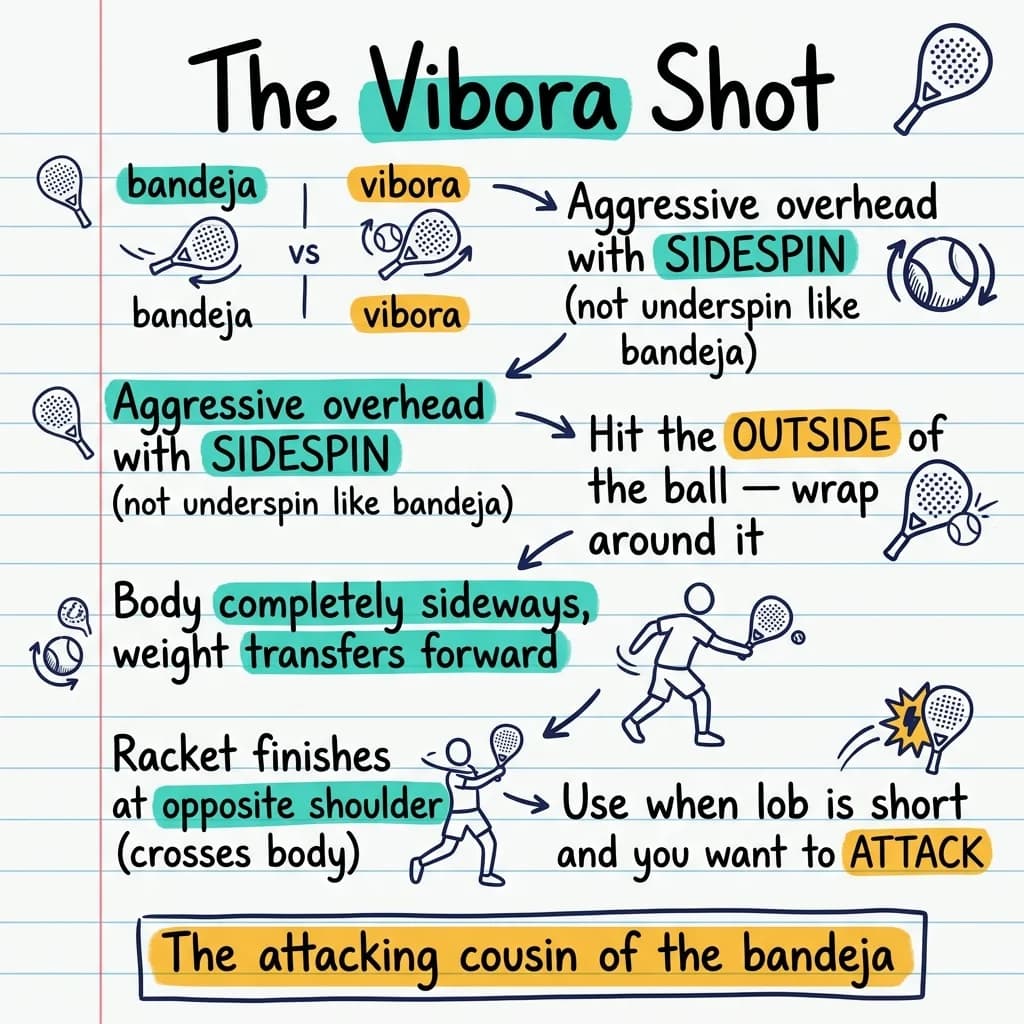
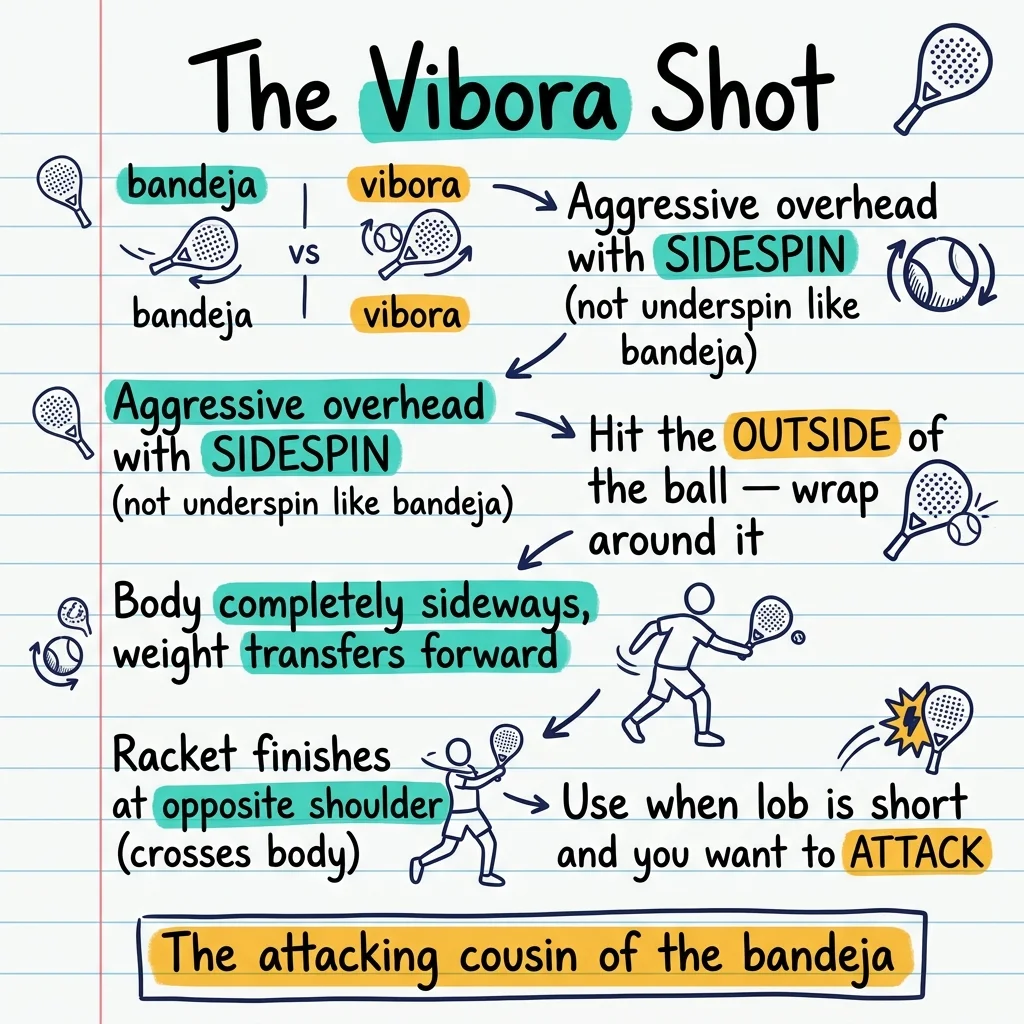
The vibora is pádel's aggressive overhead. You strike the outside of the ball with a lateral wrapping motion, generating sidespin that makes the shot faster, flatter, and harder to return than a bandeja. Use it when a lob falls short and you're well-positioned near the net. The bandeja uses underspin to control and reset — the vibora uses sidespin to attack. It's the shot that turns defense into offense in one swing.
Last updated: March 2026 · Technique breakdown based on Premier Padel match analysis and coaching from NOX and The Padel School.
Vibora vs Bandeja: One Sentence
The bandeja slices under the ball for control. The vibora wraps around the ball for attack.
That's it. Everything else — the stance, the follow-through, the timing — flows from that one difference.
When to Use the Vibora
Pick the vibora when:
- The lob is short — you're close to the net with time to set up
- You want to attack — not reset, not buy time, but take the point
- Opponents are at the net — the sidespin creates awkward angles
- You want to change pace — surprise the other team after a series of bandejas
Pick the bandeja instead when you're off-balance, the lob is deep, or you just need to stay in the rally. The vibora needs a solid setup — never force it.
How to Hit the Vibora: 5 Steps
1. Position Sideways and Read the Lob
Turn your body completely sideways as the lob goes up. Your non-dominant shoulder points toward the net. Position yourself beside the ball — not behind it like you would for a bandeja.
The earlier you read the lob, the more time you have to set up. This is the same principle as the bandeja — but the body position is slightly different because you need to wrap around the ball, not slice under it.
2. Bring the Racket Behind Your Head
Raise your elbow to shoulder height. Bring the racket behind your head. Your body weight shifts onto your back foot.
Think of a coiled spring. You're storing energy that will release through the lateral rotation.
3. Strike the Outside of the Ball
This is the money move. Instead of slicing under the ball (bandeja), hit the outside of the ball with a lateral motion. Wrap around it. The racket face should be more closed than a bandeja — you're creating sidespin, not underspin.
Per NOX coaching resources, the ball needs to be separated from your body. You need to get round it to put spin on the shot.
4. Transfer Weight Forward
As you strike, shift your body weight from the back foot to the front foot. Your non-racket arm follows the rotation of your body. This weight transfer is what separates a powerful vibora from a weak one.
5. Follow Through to the Opposite Shoulder
Finish with the racket at the height of your opposite shoulder. The follow-through goes across your body — not out in front like a bandeja.
Recover to net position immediately. The vibora is an attacking shot, but if it doesn't win the point outright, you need to be ready for the next ball.
Common Mistakes
Hitting under instead of around. If you slice under, you're hitting a bandeja. The sidespin comes from wrapping around the outside of the ball.
Standing too square. You need full sideways rotation. A square stance kills the body rotation that generates spin.
Forcing it when off-balance. The vibora needs a clean setup. If you're scrambling, hit a bandeja instead. Bad viboras turn into gifts for your opponents.
No weight transfer. Hitting with just the arm produces a flat, weak shot. The power comes from shifting your weight through the ball.
Pro Reference
Watch Arturo Coello's vibora on the Premier Padel circuit. He generates massive sidespin by getting his body completely sideways and whipping through the ball. The sound is different from a bandeja — you can hear the spin. Agustín Tapia and Federico Chingotto are two more players who use the vibora as a primary attacking weapon from the net.
Frequently Asked Questions
Never miss an edition
Weekly Monday issue. 3-minute read. Free. EN + ES.
Related Articles
How to Hit the Lob (Globo) in Padel: The Shot That Steals the Net
The lob (globo) pushes opponents off the net and flips the point. Learn when to lob, where to aim, and how to execute flat and topspin lobs.
How to Smash in Padel: Flat, Topspin, X3, and X4 Explained
Learn the four types of padel smash — flat, topspin, x3, and x4. When to use each, technique breakdown, and common mistakes.
What Is the Chiquita in Pádel? The Shot That Wins You the Net
The chiquita is a soft, low shot aimed at the net player's feet — and it's how you take the net from the back of the court. Here's how to hit it.